SaaS Development Life Cycle Explained: Stages, Phases and What to Expect
Introduction
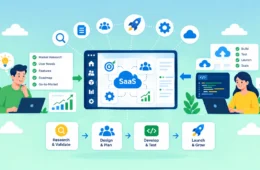
Every successful SaaS product goes through a predictable set of phases, from the first spark of an idea to a mature, scaling product with thousands of users. Understanding the SaaS development life cycle before you start building is one of the most valuable things you can do. It helps you allocate time and budget realistically, avoid common pitfalls, and set the right expectations with your team and stakeholders.
This guide walks through every phase of the SaaS product development lifecycle in detail, explaining what happens in each stage, who is involved, and what decisions need to be made.
What Is the SaaS Development Life Cycle?
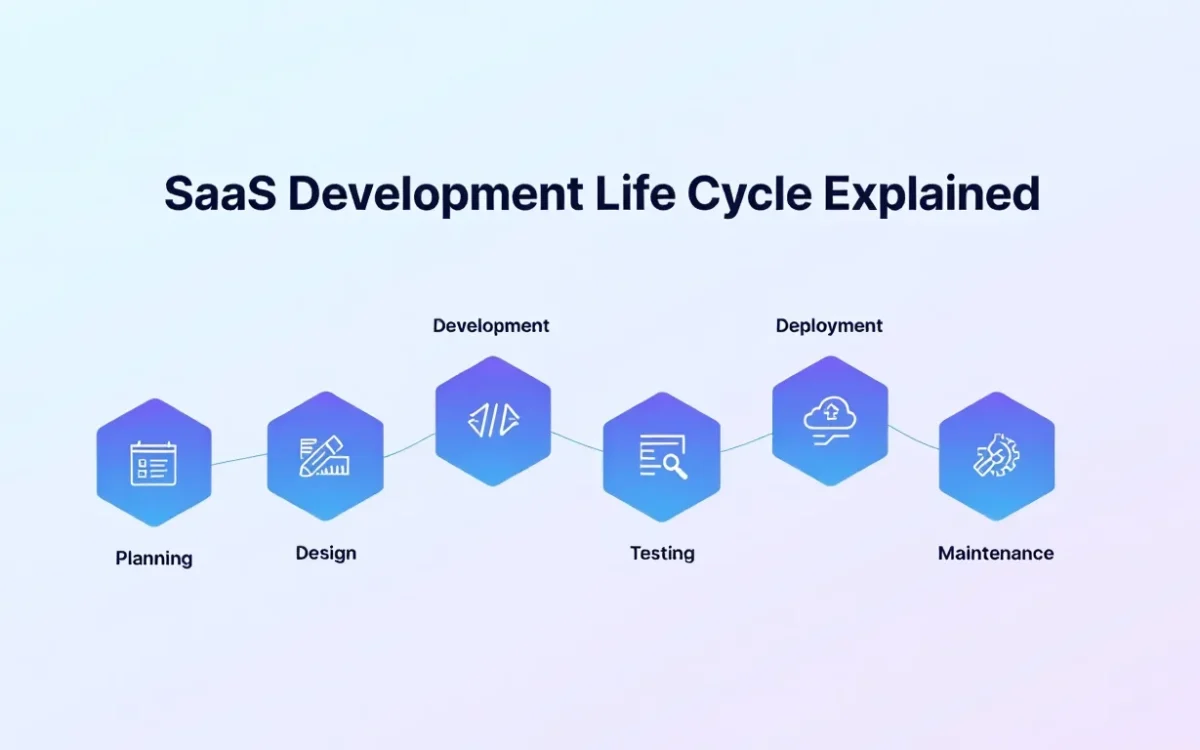
The SaaS development life cycle (SDLC) is the structured process of taking a SaaS product from concept to launch and beyond. Unlike traditional software that ships once and is largely static, SaaS products are in a constant state of evolution, the lifecycle is continuous, not linear.
However, every SaaS product goes through a common set of foundational phases before it reaches that continuous iteration stage. Understanding these phases is essential for planning, budgeting, and team structure.

Phase 1: Discovery and Ideation
Every successful SaaS product starts with a problem worth solving. The discovery phase is where you deeply understand that problem, the users who experience it, and the market landscape.
What happens in this phase:
- Customer interviews and user research
- Market analysis and competitor research
- Defining the Ideal Customer Profile (ICP)
- Identifying core pain points and the unique value proposition
- Initial product vision and concept validation
The output of this phase is a clear product brief, a document that defines what you are building, for whom, and why it is better than existing alternatives.
Phase 2: Requirements Definition
Once the concept is validated, the next step is defining what the product needs to do. This is where product managers, designers, and technical leads translate the product vision into concrete requirements.
Functional requirements:
What the system must do, features, user flows, data models, and integrations.
Non-functional requirements:
How the system must behave, performance targets, security standards, scalability expectations, and uptime requirements.
A well-written requirements document prevents scope creep, enables accurate estimation, and gives developers a clear target to build toward.
Phase 3: Architecture and Technical Design
The architecture phase is where the engineering team designs the technical foundation of the SaaS product. Decisions made here will determine how well the product performs, scales, and evolves for years to come.
Key architectural decisions:
- Multi-tenancy strategy: shared database, separate schemas, or separate databases per tenant
- Cloud platform selection: AWS, Azure, or Google Cloud
- Tech stack: frontend framework, backend language, and database choices
- API design: RESTful or GraphQL
- Authentication and authorization architecture
- Microservices vs monolithic architecture
The architecture phase also produces infrastructure diagrams, database schemas, and API specifications that the development team will work from.
Phase 4: UI/UX Design
Great SaaS products are built on great user experiences. The design phase translates requirements and architecture into wireframes, prototypes, and high-fidelity designs that developers will implement.
What this phase produces:
- User journey maps showing how different user types move through the product
- Wireframes for every key screen and interaction
- A design system with components, typography, and color standards
- High-fidelity prototypes for user testing before development begins
Phase 5: Development (Agile Sprints)
Development is where the product gets built. Professional SaaS development teams use agile methodologies, typically Scrum or Kanban, working in two-week sprints that deliver working functionality at the end of each cycle.
Each sprint includes planning, development, testing, and a demo. This iterative rhythm keeps the team focused, keeps stakeholders informed, and allows for course corrections throughout the build.
Development sub-phases typically include:
- Core infrastructure and authentication setup
- Database and API layer development
- Frontend development and component library
- Feature development sprint by sprint
- Third-party integrations (billing, email, analytics)
Phase 6: Quality Assurance and Testing
QA is not a single phase, it runs throughout development. However, there is typically a dedicated QA phase before launch that includes comprehensive testing across multiple dimensions:
- Functional testing: does every feature work as specified?
- Performance testing: how does the application behave under high load?
- Security testing: penetration testing, vulnerability scanning, and code review
- Browser and device compatibility testing
- User acceptance testing (UAT) with real users or stakeholders
Phase 7: Launch and Deployment
The launch phase involves deploying the product to production and making it available to users. A professional SaaS launch includes:
- Production environment setup and configuration
- CI/CD pipeline configuration for future deployments
- Monitoring and alerting setup (Datadog, Sentry, PagerDuty)
- Data backup and disaster recovery procedures
- A phased rollout plan (beta users first, then general availability)
Phase 8: Post-Launch Iteration and Scaling
For SaaS products, launch is not the finish line, it is the starting line. After launch, the lifecycle shifts into a continuous loop of measuring, learning, and improving.
What the post-launch phase involves:
- Analyzing user behavior through analytics and session recording tools
- Gathering feedback through in-app surveys, support tickets, and user interviews
- Prioritizing the feature backlog based on user data and business impact
- Continuing sprint-based development to release new features and improvements
- Scaling infrastructure as user volume grows
How Long Does the SaaS Development Life Cycle Take?
This depends heavily on the complexity of the product and the size of the team. As a general guide:
MVP (minimum viable product): 8 to 16 weeks for a focused, well-scoped initial version.
Full V1 product: 16 to 32 weeks for a complete first version with all core features.
Enterprise SaaS product: 6 to 18 months for products with complex integrations, compliance requirements, and multi-tier user roles.
Have questions or ready to get started? Contact us and our team will guide you through every step of the process.
Conclusion
Understanding the SaaS product development lifecycle before you start gives you a realistic map of the journey ahead. Each phase builds on the last, skimp on discovery and you build the wrong thing; rush architecture and you pay for it in technical debt; neglect QA and your launch damages your reputation before you have earned it.
Software Flux Solutions manages the full SaaS development life cycle for our clients, from the first discovery session through to post-launch iteration and scaling. If you are planning a SaaS product, we would love to hear about it.

Zainab Bibi
Senior SAAS Project Manager
1+ Years of Experience in SAAS Projects Management