What Is UX Design? Meaning, Definition & Why It Matters
Quick Summary
UX design (user experience design) is the process of designing how a person feels and behaves while using a product, a website, app, or software platform. It covers research, structure, usability, and interaction, not just visuals. UX is often confused with UI (user interface) design, but UI is only the visual layer; UX is the entire experience underneath it. Businesses invest in UX because it directly affects conversions, retention, and customer trust, poor UX is one of the fastest ways to lose a user, no matter how good the product actually is.
Table of Contents
- What Does UX Mean?
- What Is UX Design, Exactly?
- UX vs UI: What’s the Difference?
- Why UX Design Is Important
- What Does UX Stand For in Technology?
- Core Elements of UX Design
- Common UX Terms & Abbreviations Explained
- FAQs
What Does UX Mean?
UX is the abbreviation for user experience. The term describes every interaction a person has with a company, product, or service, but in digital contexts, it specifically refers to how someone experiences a website, app, or piece of software. The phrase was coined by cognitive scientist Don Norman in the 1990s, who wanted a term broader than “usability” to capture the full experience, not just whether something worked.
So when someone asks “what does UX stand for,” the direct answer is user experience, but the deeper meaning is about how a product makes someone feel while they try to get something done.
What Is UX Design, Exactly?
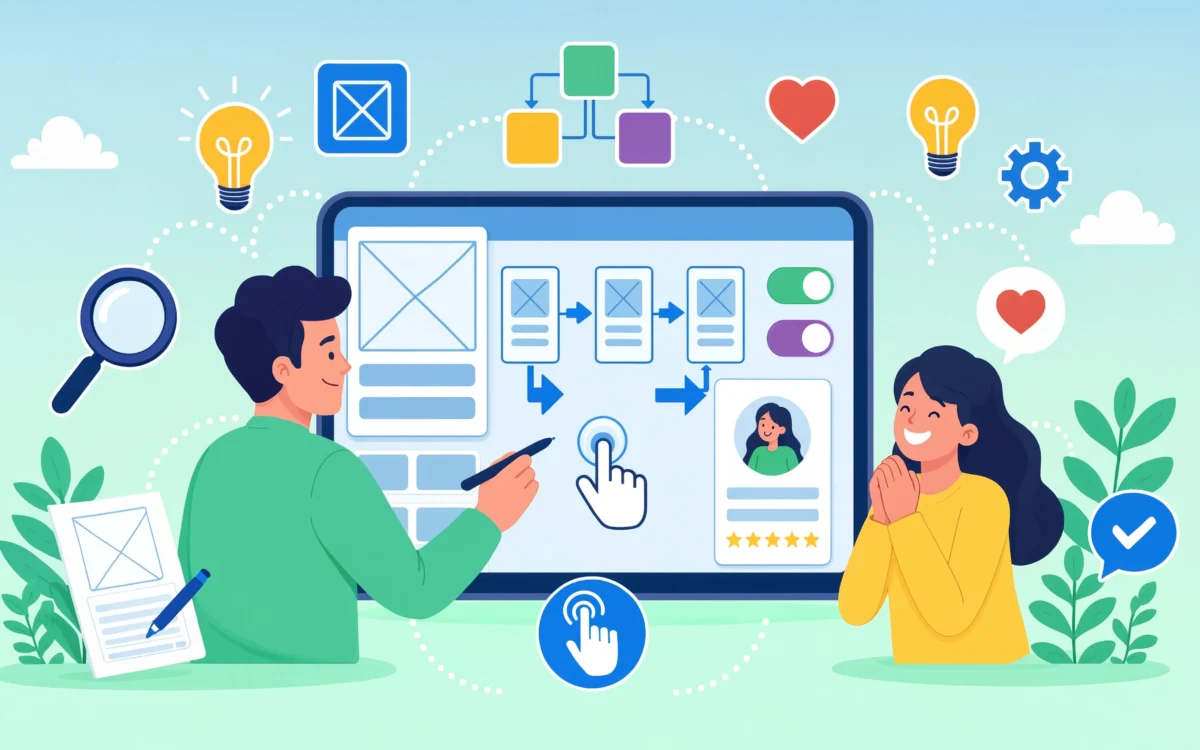
UX design is the discipline of intentionally shaping that experience. It’s a process, not a single deliverable. A UX designer typically works through:
- Research – understanding who the users are and what problem they’re trying to solve
- Structure – mapping out user flows and information architecture so navigation makes sense
- Wireframing – laying out screens at a basic level to test logic before visuals are added
- Prototyping – building clickable, testable versions of the product
- Testing – validating designs with real users and refining based on friction points
The goal is simple: reduce confusion, reduce effort, and help users complete their goal as smoothly as possible. UX design applies to websites, mobile apps, SaaS dashboards, physical kiosks, and even non-digital services, anywhere a person interacts with a system.
UX vs UI: What’s the Difference?
This is one of the most searched comparisons in the space, and for good reason, the two are tightly linked but not the same thing.
| UX Design | UI Design | |
|---|---|---|
| Definition | The full experience of using a product | The visual and interactive layer of a product |
| Focus | How it works | How it looks and feels to touch/click |
| Output | User flows, wireframes, research findings | Buttons, colors, typography, layouts |
| Question it answers | “Can the user complete their goal easily?” | “Is this interface visually clear and appealing?” |
Think of it this way: UX is the blueprint of a house, the layout, the flow between rooms, whether the design makes sense for how people live. UI is the paint, furniture, and finishes. A house can look stunning (great UI) but have a terrible layout (bad UX), and vice versa. The best digital products need both working together, which is why “UI/UX” is so often used as a combined term, even though they’re different disciplines.
Why UX Design Is Important
UX isn’t a “nice to have”, it has a direct, measurable impact on business outcomes:
- Conversion rates – Confusing checkout flows or unclear navigation cause users to abandon before converting.
- Retention – Users who struggle to complete tasks churn faster, even if the core product is strong.
- Cost of development – Fixing usability problems after launch is far more expensive than catching them in the design phase.
- Trust and credibility – A confusing or clunky digital experience makes users question the reliability of the business behind it.
- Competitive advantage – When products are functionally similar, the one with the smoother experience usually wins the user.
In short, UX design is why some products feel effortless and others feel like a fight and that difference shows up directly in revenue.
What Does UX Stand For in Technology?
In a technology context specifically, UX refers to the practice within product and software teams responsible for how users experience digital interfaces, websites, apps, SaaS platforms, and connected devices. It sits alongside disciplines like UI design, product management, and engineering, and is typically owned by a dedicated UX designer or researcher on a product team. In tech, “UX” is rarely used loosely, it refers specifically to structured research and design practices, not just general customer experience.
Core Elements of UX Design
A complete UX design practice typically includes:
- User Research – interviews, surveys, and behavioral data to understand real user needs
- Personas & Journey Mapping – representing user types and the paths they take through a product
- Information Architecture – organizing content and navigation logically
- Interaction Design – defining how users interact with elements (clicks, gestures, transitions)
- Usability Testing – observing real users to catch friction before launch
- Accessibility – ensuring the product works for users with different abilities and needs
Common UX Terms & Abbreviations Explained
- UX – User Experience
- UI – User Interface
- UXUI / UI/UX – The combined discipline covering both experience and interface design
- UX Research – The research phase that informs design decisions
- Wireframe – A basic structural layout of a screen, without visual styling
- Prototype – An interactive, testable version of a design
- Usability – How easily a user can accomplish a task within a product
FAQs
What does UX stand for?
UX stands for user experience, the overall experience a person has while interacting with a product, website, or app.
What is UX design in simple terms?
UX design is the process of designing how a product works and feels to use, focused on making tasks easy and intuitive for the user.
What is the difference between UI and UX?
UX is the full experience and structure of a product; UI is the visual and interactive layer, the screens, buttons, and styling the user actually sees and touches.
Why is UX important for a business?
Good UX increases conversions, reduces user drop-off, lowers development costs from late-stage fixes, and builds trust in the product and brand.
What is UX and UI meaning together?
“UI/UX” refers to the combined practice of designing both the experience (structure, flow, usability) and the interface (visuals, interactions) of a digital product.
Is UX the same as user interface design?
No. User interface (UI) design is a subset of the broader UX process, UI covers the visual layer, while UX covers the entire journey and structure behind it.
What does UX refer to in technology specifically?
In tech, UX refers to the structured practice of researching, designing, and testing how users interact with software products, distinct from general customer service or marketing experience.
Want to see what strong UX design actually looks like in practice? Explore our UI/UX design services or talk to our team about your product.

Zainab Bibi
Senior SAAS Project Manager
1+ Years of Experience in SAAS Projects Management