Restaurant Booking System Development: Why US Restaurants Are Building Custom Platforms
The US restaurant industry processes hundreds of millions of dining reservations every year. For a long time, the technology layer managing those reservations was dominated by a handful of large platforms: OpenTable, Resy, Yelp Reservations. Restaurants paid per-cover fees, accepted the platform’s branding, and handed over their guest data in exchange for access to the platform’s marketplace of hungry diners.
That deal is becoming less attractive. A growing number of US restaurants, from independent fine dining establishments to fast-casual multi-location groups, are choosing custom restaurant booking system development as a path to lower costs, full data ownership, and a guest experience they actually control.
This guide explains what a custom restaurant booking system should include, when it makes more financial sense than paying per-cover platform fees, and what the development process looks like.
The Problem with Platform-Based Restaurant Reservations
Third-party reservation platforms solved a real problem when they launched. They provided a discovery mechanism that brought new diners to restaurants, and they provided a booking technology that most restaurants could not have built themselves.
But the economics have shifted. Consider a restaurant doing 500 covers per week. At an average third-party platform fee of $1.50 per cover, that is $750 per week, $3,000 per month, $36,000 per year in reservation fees. For a fine dining establishment with higher margins, this is manageable. For a neighbourhood restaurant operating on typical US restaurant margins of 3 to 5%, it is significant.
Beyond cost, the data ownership problem is equally pressing. Every guest profile, preference note, visit history, and contact record built through a third-party platform belongs to that platform, not the restaurant. When a guest books through OpenTable, they are an OpenTable customer who happens to visit your restaurant. When they book through your own custom online reservation system, they are your customer.
What a Custom Restaurant Booking System Should Include
Real-Time Table Management
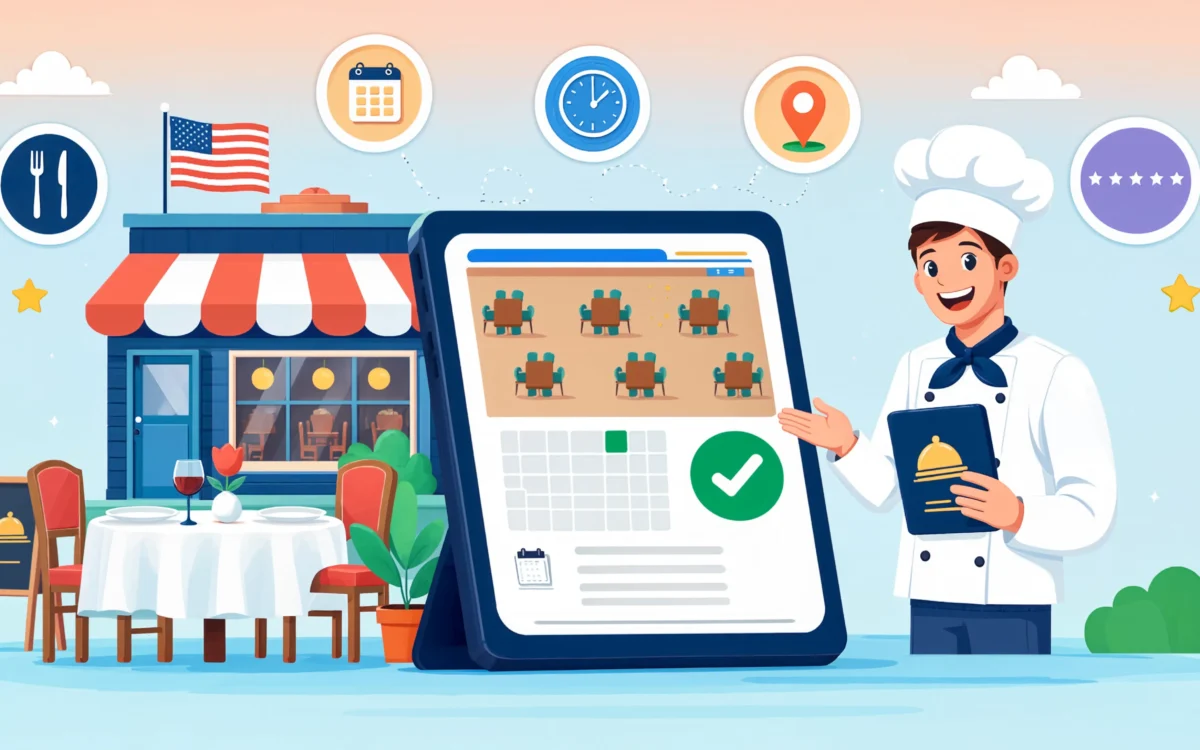
A visual floor plan view showing table status (available, occupied, reserved, in service) in real time, updating automatically as front-of-house staff seat guests and clear tables. Reservation slots must account for realistic cover times by party size and section, not just theoretical maximums.
Online and Phone Reservation Handling
A guest-facing online booking interface that integrates with your website and social media profiles, and a streamlined staff interface for handling phone reservations and walk-in management. Both channels should write to the same real-time availability calendar.
Automated Guest Communications
Confirmation messages sent at the time of booking, reminder messages 24 hours before the reservation, and post-dining follow-up messages requesting a review or offering a return visit incentive. All automated, all branded to the restaurant.
Deposit and Credit Card Hold Management
For high-demand booking slots, special events, and large party reservations, the system should support deposit collection or credit card hold at the time of booking, with configurable cancellation policies that automatically charge a no-show fee when applicable.
Guest Profile and Preference Management
A centralised guest database storing visit history, party size patterns, dietary requirements, allergy notes, celebration occasions, preferred server assignments, and any other preference information. This data powers genuinely personalised hospitality at scale.
Waitlist and Walk-In Management
A digital waitlist that captures walk-in guest contact details, sends an automated SMS notification when their table is ready, and integrates with the real-time floor plan so hosts always know exactly how long the wait is.
Private Dining and Event Booking
A separate module for managing private dining room reservations, buyout enquiries, and event bookings, including custom menus, AV requirements, deposit schedules, and contract documentation.
Analytics and Reporting
Covers per service, average spend per cover, no-show rate, reservation source attribution, party size distribution, and peak capacity utilisation. These metrics are the foundation of intelligent revenue management.
Integration Requirements for Restaurant Booking Systems
A custom restaurant booking system does not exist in isolation. It should connect with:
- POS system integration: When a table is cleared and payment is processed, the booking system should update table status automatically. Guest spend data from the POS can enrich the guest profile for future personalisation.
- Online ordering platforms: For restaurants offering private event catering or off-site dining, the booking system should coordinate with the kitchen management system on pre-ordered menus.
- Review platforms: Post-dining communication workflows that invite happy guests to leave a review on Google or Yelp, timed appropriately after the meal.
Our team builds these integrations into the platform from the outset, rather than bolting them on as afterthoughts. The full SaaS development methodology we apply to restaurant platforms is the same as what we bring to our event management platform development and marketplace development work: architecture first, features second.
The Financial Case for Custom vs Third-Party
Let us model the break-even analysis for a restaurant spending $36,000 per year in third-party reservation fees.
A custom restaurant booking system development project for a single location typically costs $35,000 to $80,000 depending on feature complexity. At $36,000 annual platform fees, a mid-range custom build pays for itself within 18 to 24 months.
For multi-location restaurant groups, the economics are even more compelling. A custom system built for one location can be extended to multiple locations at incremental cost. A third-party platform charges per-cover fees across every location with no volume discount.
For detailed cost modelling specific to your situation, our booking system cost guide provides a comprehensive framework.
London’s restaurant and hospitality sector is one of the most digitally sophisticated in Europe, with ecommerce website development london agencies developing extensive experience serving the specific online commerce needs of a dense, competitive, and internationally diverse dining market. This accumulated hospitality commerce experience translates directly into relevant capability for restaurant booking system development, since online payment processing, promotional mechanics, group booking management, and digital menu presentation are increasingly standard components of the best restaurant technology platforms rather than premium add-ons. Development teams with London hospitality market background typically surface operational requirements early that a team without direct restaurant sector exposure would need significantly more time to discover during the project itself.
US Restaurant Markets Leading Custom Booking Technology Adoption
Custom restaurant booking system development is most active in high-cost, high-margin dining markets where the per-cover fee burden is greatest and the guest experience standards are highest.
New York City: Fine dining establishments in Manhattan are among the most sophisticated adopters of custom guest experience technology, using proprietary booking systems as a competitive differentiator in one of the world’s most demanding dining markets.
Los Angeles: The LA restaurant scene, driven by celebrity chef brands and hospitality groups managing multiple concepts, increasingly uses custom platforms to unify guest data and loyalty programs across their entire portfolio.
Chicago and Miami: Growing fine dining scenes in both cities, combined with active private dining markets for corporate events, are driving demand for custom restaurant booking and event management platforms.
Getting Started with Custom Restaurant Booking Development
If your restaurant group is spending meaningfully on third-party reservation platforms, or if you are launching a new concept where guest experience technology is a differentiating factor, custom booking system development deserves serious evaluation.
Contact Software Flux Solutions to discuss your restaurant’s specific requirements. We develop custom booking systems for US hospitality businesses and can provide a transparent cost and timeline estimate based on your concept, location count, and integration requirements. Our website development USA team can also ensure your restaurant website is built to convert visitors into reservations from day one.

Zainab Bibi
Senior SAAS Project Manager
1+ Years of Experience in SAAS Projects Management