ERP Software Development: Build vs Buy Guide for Growing US Businesses
As US businesses scale past a certain operational complexity, spreadsheets and disconnected point solutions stop working. Inventory, finance, HR, procurement, and production data live in different systems that do not talk to each other, and every month the manual reconciliation work grows more painful. This is the moment most growing businesses begin evaluating ERP software, and quickly run into the central question that this guide addresses directly: should you build custom ERP software or buy an established platform?
What ERP Software Actually Does
Enterprise resource planning software centralises core business operations into a single connected system. Rather than separate tools for accounting, inventory, procurement, production planning, and HR, an ERP platform unifies this data so that a change in one area, such as a sales order, automatically reflects across inventory levels, production schedules, and financial reporting without manual re-entry.
For businesses operating with disconnected systems, the operational cost of this fragmentation is often invisible until it is quantified: hours spent reconciling spreadsheets, errors introduced by manual data transfer, and decisions made on data that is already out of date by the time it reaches a manager’s desk.
The Build vs Buy Decision for ERP Software
This decision should be evaluated against four core factors: how standard or unique your operational processes are, your growth trajectory, your budget tolerance, and your appetite for ongoing platform ownership.
Buying an established ERP platform such as NetSuite, SAP Business One, or Microsoft Dynamics makes sense when your business processes are reasonably standard for your industry, you need to be operational quickly, and you have budget for ongoing licensing fees that scale with users and modules.
Building custom ERP software becomes the stronger choice when your operational workflows are genuinely unique and do not map well onto standard ERP modules, when you need deep integration with proprietary systems or industry specific equipment, when licensing costs at your scale would exceed custom development cost over a reasonable time horizon, or when you want complete ownership of your operational data and the system that manages it without dependency on a third party vendor’s roadmap.
When ERP Software Development Makes the Strongest Case
Custom ERP software development consistently delivers the best return on investment in specific scenarios. Manufacturing businesses with highly specific production workflows that standard ERP modules handle poorly are a common case, since generic ERP systems are built around average manufacturing processes, not the specific sequencing and quality control steps that differentiate your operation.
Businesses in regulated industries with compliance reporting requirements that off the shelf ERP systems do not natively support represent another strong case, particularly when audit trail and data residency requirements are non negotiable.
Companies experiencing rapid growth that would quickly outgrow the licensing tiers of standard ERP platforms often find that custom development, while requiring greater upfront investment, avoids the escalating per user and per module fees that compound significantly at scale.
Businesses with a genuinely unique value proposition built around operational efficiency, where the ERP system itself becomes a competitive differentiator rather than simply back office infrastructure, also benefit from a custom approach that competitors using standard platforms cannot replicate.
ERP platforms, particularly custom-built ones with deep integration requirements, sit firmly in the category of software where complex web programming uk professionals have built decades of demonstrated expertise. The UK development market’s track record in enterprise-grade custom software is partly explained by persistent demand from large financial services, manufacturing, and public sector organisations that have required sophisticated, compliance-aware systems for longer than most other markets. Businesses evaluating a custom ERP build should include UK-based development teams in their comparison shortlist specifically because of this accumulated domain depth in complex, integration-heavy enterprise software.
Core Modules in Custom ERP Software Development
A custom ERP platform typically includes several interconnected modules, each built specifically around your actual workflows rather than generic best practice assumptions.
- Financial management: General ledger, accounts payable and receivable, multi currency support where relevant, and real time financial reporting
- Inventory and supply chain: Stock level tracking, automated reorder triggers, supplier management, and warehouse location tracking
- Production planning: Work order management, capacity planning, and quality control checkpoints specific to your manufacturing or service delivery process
- Procurement: Purchase order management, supplier performance tracking, and approval workflows
- Human resources: Employee records, payroll integration, time tracking, and compliance documentation
- Customer relationship management: Often integrated directly into the ERP rather than maintained as a separate system, ensuring sales, fulfilment, and finance data remain unified
The Technical Architecture Behind Custom ERP Platforms
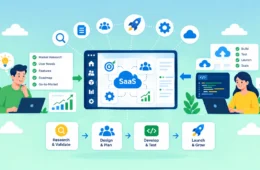
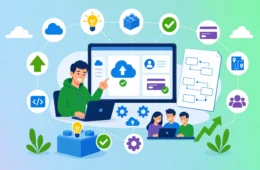
Modern custom ERP software is built as a cloud native, multi module SaaS platform rather than the on premise monolithic systems of a previous generation. This typically means a modular architecture where each business function exists as a discrete service communicating through well defined APIs, allowing modules to be developed, tested, and updated independently without risking the stability of the entire system.
Role based access control is essential given the sensitivity of financial and operational data flowing through an ERP system, ensuring that employees only access the specific data and functions relevant to their role. Real time reporting and dashboard capabilities give leadership visibility into operations as they happen rather than relying on end of month reports compiled manually from disconnected sources.
ERP Development Cost and Timeline
Custom ERP software development represents a significant investment, typically ranging from $80,000 for a focused, single department solution to $400,000 or more for a comprehensive, multi module enterprise platform. Development timelines generally span six to eighteen months depending on the number of modules and integration complexity with existing systems.
This investment should be evaluated against the multi year licensing cost of comparable functionality from established ERP vendors, which often exceeds custom development cost within three to five years once user growth and module expansion are factored in.
Integration Considerations
Most businesses considering custom ERP development already operate other software systems that the new platform must work alongside, not replace entirely. Integration with existing CRM systems, e-commerce platforms, and industry specific tools should be planned explicitly during the architecture phase rather than treated as an afterthought once development is complete.
Getting Started With ERP Software Development
The right starting point for any ERP decision is a structured discovery process that maps your actual operational workflows in detail before any architecture or build versus buy decision is finalised. Our SaaS development practice approaches ERP projects exactly this way, ensuring the platform built reflects how your business genuinely operates rather than a generic template.
If your business has outgrown disconnected spreadsheets and point solutions, contact our team to discuss whether custom ERP development or an established platform is the right fit for your specific operational complexity and growth trajectory.

Zainab Bibi
Senior SAAS Project Manager
1+ Years of Experience in SAAS Projects Management