Why US Companies Outsource Software Development (And How to Do It Right)
US companies outsource software development primarily to access specialised technical expertise, reach faster launch timelines, and scale engineering capacity without the cost and delay of in-house hiring. The global outsourcing market reached an estimated $600 billion in 2026.
Every year, thousands of US businesses reach the same conclusion at roughly the same point in their growth: building software in house is no longer the fastest or smartest path forward. From early stage startups racing to ship an MVP to established enterprises modernising legacy systems, outsourcing software development has become a default strategy rather than a fallback option.
The numbers back this up. The global software development outsourcing market is estimated at roughly $600 billion in 2026, and it is still growing at a double digit annual rate as more companies shift core product work, not just commodity coding, to external partners. The cost gap driving this is significant: a senior US-based software engineer typically costs $177,000 to $220,000 in base salary alone, before benefits, equipment, and overhead are added, often pushing the real annual cost 30 to 40% higher. Outsourced development delivers comparable senior-level talent at a fraction of that fully loaded cost, which is why outsourcing has moved from a budget tactic to a default strategy for companies at nearly every stage of growth.
But outsourcing done badly is one of the most expensive mistakes a business can make. Missed deadlines, poor code quality, communication breakdowns, and products that do not match the original vision are all common outcomes of outsourcing relationships built on the wrong assumptions.
This guide explains why US companies outsource software development in 2026, what the real benefits and risks look like, and how to structure an outsourcing relationship that actually delivers results.
The Real Reasons US Businesses Outsource Software Development
Cost reduction is often assumed to be the primary driver of outsourcing, but the data tells a more nuanced story. When US businesses are surveyed about why they choose external development partners, several factors consistently rank above pure cost savings.
Access to specialised technical expertise. Most internal teams are generalists. Building a multi tenant SaaS platform, a HIPAA compliant healthcare system, or a high traffic marketplace requires specific architectural experience that many in house teams simply do not have. Outsourcing gives businesses access to specialists who have solved these exact problems before. This gap is structural, not temporary: the U.S. Bureau of Labor Statistics projects software developer employment to grow 15% between 2024 and 2034, far faster than the average occupation, with roughly 129,200 openings projected every year. Specialized in-house hiring is competing against that demand curve, which is a large part of why specialist outsourcing has become the more reliable path to niche expertise.
Speed to market. Hiring a full in house engineering team takes months. Recruitment, onboarding, and team formation alone can consume a quarter or more before meaningful development work begins. An established development partner can begin building within weeks.
Flexibility to scale up and down. Internal headcount is difficult to adjust quickly. Outsourced development capacity can expand for a major release and contract during quieter periods without the overhead of hiring and layoffs.
Avoiding the management burden of a full engineering department. Recruiting, retaining, and managing software engineers is a discipline in itself. Many growing US businesses would rather focus internal management attention on their core product strategy and let an external partner handle technical delivery.
Cost efficiency, where it genuinely applies. While cost is rarely the only factor, it remains real. Development costs in many outsourcing markets are meaningfully lower than equivalent senior engineering talent in major US tech hubs, without a corresponding drop in quality when the right partner is selected.
Why Do Companies Outsource Software Development? What the Data Shows
The reasons companies give for outsourcing have shifted meaningfully in the last few years, and the shift matters for how you should evaluate the decision. According to Deloitte’s Global Outsourcing Survey, cost reduction as the primary driver has fallen sharply, from roughly 70% of executives citing it as their main reason in 2020 to just 34% by 2024. Access to specialized skills and organizational agility have moved up to take its place as the leading drivers.
This lines up with what we see in practice. Companies rarely come to us because in-house development is impossible to afford, they come because they need expertise their internal team doesn’t have, or because they need to move faster than internal hiring allows. Cost efficiency is still real and still matters, it’s just no longer the whole story, and treating it as the only factor tends to produce worse partner-selection decisions.
Common Outsourcing Models US Businesses Use
Not all outsourcing arrangements look the same. Understanding the structure that fits your situation is the first step toward a successful partnership.
Project based outsourcing. A defined scope, timeline, and budget for a specific deliverable, such as building an MVP or a particular feature set. Best suited to businesses with a clear, well documented requirement.
Dedicated team model. A development partner assembles a team that works exclusively on your product over an extended period, functioning much like an extension of your internal team. This model works well for ongoing product development where requirements evolve over time.
Staff augmentation. Individual developers or specialists are added to an existing internal team to fill specific skill gaps or temporary capacity needs.
Full outsourced product development. The development partner owns the entire technical delivery, from architecture through to deployment and ongoing maintenance, typically for businesses without any internal technical leadership. This model overlaps closely with custom application development more broadly, since the outsourcing partner is effectively acting as your entire product development function.
What’s Included in Outsourced Software Development Services
“Outsourcing software development” can mean very different scopes of work depending on the partner and the model. A full outsourced engagement typically covers:
- Discovery and requirements documentation — translating business goals into a technical scope before any code is written
- Architecture and technical planning — decisions that affect scalability, security, and maintainability years down the line
- Development and QA — the actual build, tested against defined acceptance criteria rather than “looks done”
- Deployment and DevOps — getting the product live in a stable, monitored environment
- Ongoing maintenance and iteration — most software relationships don’t end at launch, particularly for SaaS products
Depending on what you’re building, this can span SaaS development, mobile app development, website development, or a combination, along with supporting disciplines like UI/UX and graphic design and SEO and digital marketing once the product is ready to launch. A partner that only offers one of these in isolation may require you to coordinate multiple vendors yourself, which reintroduces some of the management overhead outsourcing is meant to remove.
Software Development Outsourcing Rates by Region in 2026
Hourly rates vary significantly by region, and understanding this range helps set realistic budget expectations before you start evaluating partners.
| Region | Typical hourly rate | Best fit for |
|---|---|---|
| North America (onshore) | $120–$200+ | Projects needing zero time zone gap and in-person collaboration |
| Western Europe | $90–$150 | Strong regulatory and compliance experience, moderate time zone overlap with US East Coast |
| Eastern Europe | $25–$45 | Strong technical depth at a meaningfully lower cost, good English fluency |
| South Asia & Latin America | $20–$40 | Lowest cost per hour, requires more rigorous vetting and communication structure |
Lower hourly rates do not automatically mean lower total cost. A cheaper rate with weak communication, unclear scope, or limited QA discipline routinely costs more once rework, delays, and missed requirements are factored in. The rate is only one input, the process behind it determines the real cost.
Outsourcing Software Development in the US: What Makes It Different
US businesses outsourcing software development face a specific set of considerations that don’t apply the same way in other markets. Domestic engineering salaries are among the highest globally, which is what makes the cost gap with outsourced talent so pronounced, but US businesses also tend to have higher expectations around communication cadence, IP ownership clarity, and compliance (particularly for healthcare, fintech, and any product handling regulated personal data).
Time zone overlap is a bigger factor for US companies than is often acknowledged. A dedicated team with at least a few hours of real-time overlap with US business hours tends to outperform a fully offshore, zero-overlap arrangement on communication quality alone, even when technical capability is equivalent. This is one of the reasons UK-based development partners have become a popular middle ground for US companies: several hours of workday overlap with the US East Coast, English-first communication, and regulatory familiarity that’s closer to US norms than most offshore alternatives.
If your business is UK-based rather than US-based and evaluating the same decision, we’ve written a companion guide covering the outsourcing considerations specific to UK businesses, including GDPR: Software Development Outsourcing: A Practical Guide for UK Businesses.
How to Choose the Right Outsourcing Partner
The single biggest determinant of outsourcing success is partner selection. Here is what separates a reliable partner from a risky one.
Look for relevant domain experience, not just general capability. A development team that has built healthcare platforms, construction SaaS, or marketplace systems before will understand the specific challenges of your industry far faster than a generalist team learning on your project. Software Flux Solutions brings direct experience across verticals including healthcare CRM development, construction SaaS platforms, and marketplace development.
Demand transparency on process, not just price. Ask how the partner runs sprints, how often you will see working software, and how scope changes are handled. A partner unwilling to share their delivery methodology in detail is a warning sign.
Check communication infrastructure before signing anything. Time zone overlap, English fluency, and responsiveness during your business hours matter enormously for day to day collaboration. A weekly status email is not a substitute for real time collaboration during active development.
Review their approach to intellectual property and code ownership. Your contract should make explicit that all code, documentation, and assets belong to you, not the development partner, upon delivery and payment.
Evaluate their architecture thinking, not just their coding speed. Anyone can write code quickly. Far fewer development teams can design an architecture that will still be maintainable, secure, and scalable two years after launch, a consideration closely tied to the broader build vs. buy decision many businesses face before committing to any outsourcing engagement. This is the difference between a vendor and a genuine technical partner.
US businesses looking to outsource software development increasingly consider European markets, particularly the UK, as a strategic destination. Strong technical talent, cultural alignment with American working practices, and convenient time zone overlap with the US East Coast make UK-based development teams highly attractive for businesses that want outsourcing benefits without the communication overhead of more distant markets. Whether you are building a SaaS platform, a custom enterprise application, or a mobile product, uk web development partners bring a combination of engineering quality, regulatory awareness, and professional communication standards that is difficult to replicate at comparable cost domestically.
Red Flags to Watch For in Outsourcing Relationships
Several warning signs consistently predict outsourcing failures:
- A quote that is dramatically lower than every other proposal you received, often a sign of underqualified resources or scope that will expand significantly after signing
- Reluctance to provide references from previous clients in your industry
- No clear process for requirements documentation before development begins
- Vague answers when asked about their testing and quality assurance methodology
- Communication that consistently flows through a single account manager rather than direct access to the technical team actually building your product
- No defined process for handling scope changes once development is underway
Structuring a Successful Outsourcing Engagement
The businesses that get the most value from outsourcing share a common pattern in how they structure the relationship.
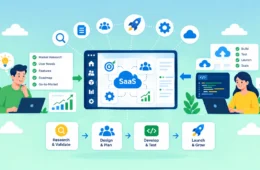
They begin with a structured discovery phase before any code is written. This typically includes documenting SaaS requirements in detail, defining success metrics, and agreeing on a technical architecture before committing to a full development budget.
They insist on incremental delivery rather than a single large release at the end of a long development cycle. Working software delivered every two weeks, reviewed and tested by the client, catches misalignment early when it is cheap to fix rather than late when it is expensive.
They maintain a single point of accountability on the development partner side, typically a technical project manager who understands both the business requirements and the engineering reality, rather than relying on sales contacts who disappear once the contract is signed.
Outsourcing SaaS Development Specifically
SaaS products carry additional outsourcing considerations beyond general software development. Multi tenancy, subscription billing, and ongoing platform evolution mean the relationship with your development partner rarely ends at launch. Our SaaS development services are built around this reality, with engagement models designed for the full product lifecycle rather than a single delivery milestone, aimed at what ultimately makes great SaaS products rather than just a shipped MVP.
Businesses evaluating their first SaaS build should also understand the broader SaaS development life cycle before engaging any outsourcing partner, since the stage of your product significantly affects what kind of partner and engagement model makes sense.
Frequently Asked Questions
Why do companies outsource software development? The leading reasons, in order of how often they come up in practice, are access to specialised technical expertise that most in-house teams lack, faster time to market than hiring and onboarding an internal team, the flexibility to scale a team up or down without the overhead of hiring and layoffs, and, further down the list than most assume, cost efficiency.
How do you outsource software development? Start with a structured discovery phase to document requirements and success metrics before writing a contract. Choose an engagement model that fits your situation, project based, dedicated team, staff augmentation, or full outsourced product development, then vet partners on relevant domain experience, communication infrastructure, and clarity around code ownership before signing anything.
Should a startup outsource software development? For most early-stage startups without an internal engineering organisation already in place, outsourcing is usually the faster and more capital-efficient path to a working product, particularly for an MVP with a clearly documented scope. The exception is a startup whose core competitive advantage is the technology itself, where building deep in-house technical ownership from day one may matter more than short-term speed or cost.
Where should you outsource software development? The right region depends on budget, required time zone overlap, and compliance needs, not on finding the single cheapest option. Eastern Europe is often chosen for a strong balance of technical depth and cost, Western Europe and the UK for closer time zone alignment with the US East Coast and stronger regulatory familiarity, and South Asia or Latin America where cost is the primary constraint and the buyer is prepared to vet partners rigorously.
What does the software development outsourcing process actually look like? A well-run engagement follows a consistent shape: discovery and requirements documentation, agreement on technical architecture before full budget commitment, incremental delivery reviewed every one to two weeks rather than one release at the end, and a single accountable technical point of contact throughout, not a sales contact who disappears after signing.
Making the Decision to Outsource
Outsourcing software development is not a universal solution, but for the majority of growing US businesses without an established internal engineering organisation, it remains the fastest and most capital efficient path to a working, scalable product.
If you are evaluating outsourcing options for an upcoming project, contact our team for a structured discovery conversation, or read our guide on how to choose a software development company in the US first if you’re still comparing partners. We will walk through your requirements, your timeline, and your budget honestly, and tell you clearly whether outsourcing your specific project to us is the right fit before any commercial discussion begins.

Zainab Bibi
Senior SAAS Project Manager
1+ Years of Experience in SAAS Projects Management