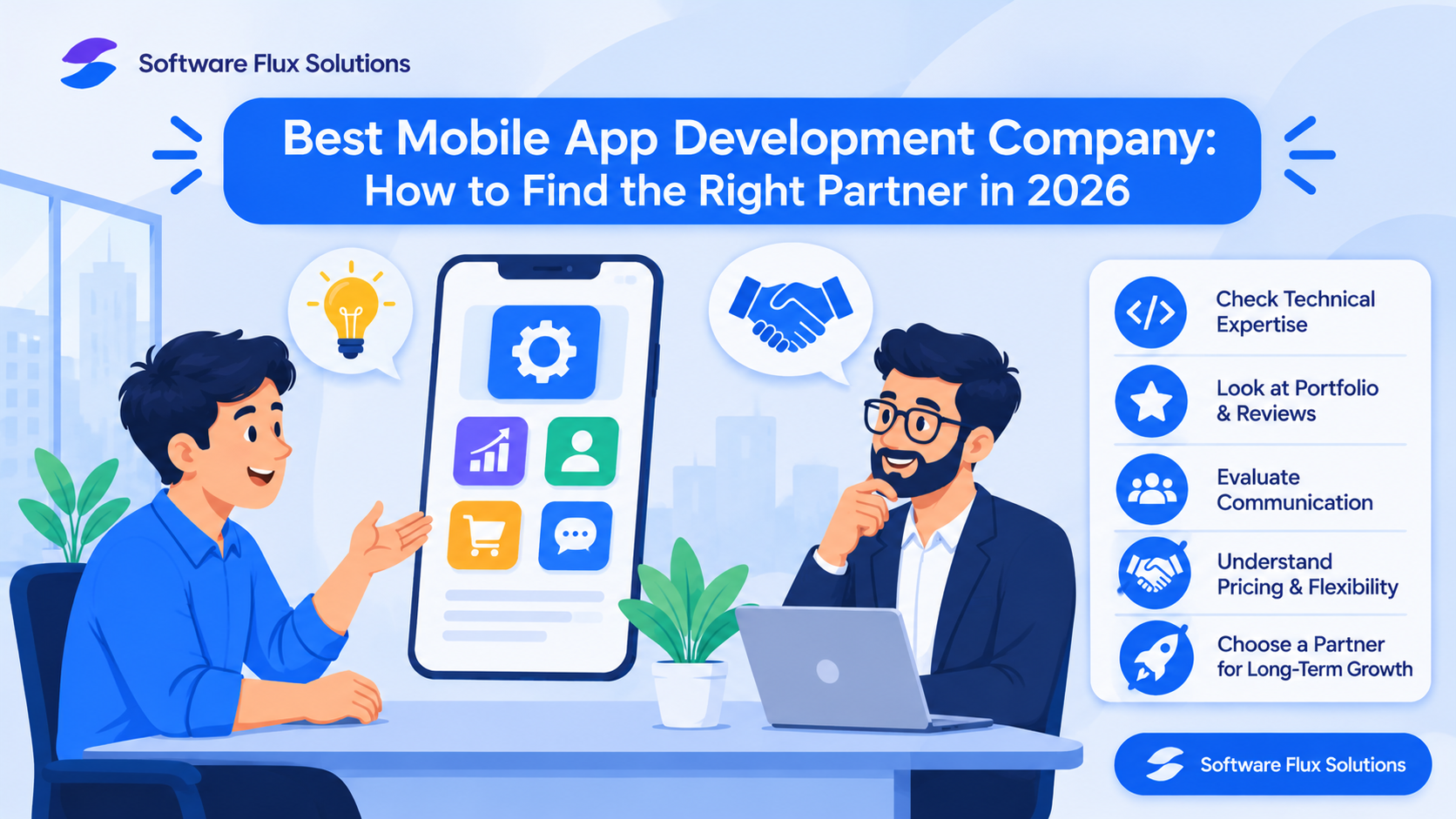
Best Mobile App Development Company: How to Find the Right Partner in 2026
Table of Contents
- What Makes a Mobile App Development Company Truly the Best?
- In-House Development vs. Hiring a Mobile App Development Company
- Native vs. Cross-Platform: What Your Agency Should Know
- 9 Criteria to Evaluate Any Mobile App Development Company
- What to Expect From the Mobile App Development Process
- How Much Does Mobile App Development Cost?
- Red Flags to Watch Out For
- Questions to Ask Before You Sign a Contract
- Frequently Asked Questions
- Conclusion
There are over 48,000 mobile app development companies listed on Clutch alone. Every one of them claims to be experienced, reliable, and results-driven. The reality is that choosing the wrong partner does not just cost money. It costs months, sometimes years, and often results in a product that never reaches its potential.
The search for the best mobile app development company is not about finding the most famous name or the cheapest quote. It is about finding the team whose process, experience, and communication style match what your project actually needs. This guide gives you a practical framework to make that decision confidently.
What Makes a Mobile App Development Company Truly the Best?
The best mobile app development company for your project is not necessarily the most decorated one. It is the one that understands your users, can translate your business goals into a working product, and communicates clearly throughout the process.
Three things separate genuinely strong companies from the rest:
A defined and transparent process. The best companies do not guess what to build. They run a structured discovery phase before development starts, invest time in understanding who the users are, and produce clear specifications before writing code. A team that skips this step will almost always cost you more money in rework than the time saved upfront.
Relevant experience in your category. A team that has built consumer fitness apps may not be the right choice for a B2B SaaS mobile product. Look for portfolio work that is close to your domain: similar users, similar complexity, similar platforms.
Honest, frequent communication. The most common reason mobile app projects fail or run significantly over budget is not technical incompetence. It is poor communication between client and agency. Regular demos, transparent sprint reporting, and a named project manager are non-negotiable.
For companies working with Software Flux Solutions, these same principles underpin every mobile and custom software project we take on.
In-House Development vs. Hiring a Mobile App Development Company
Before evaluating companies, it is worth being clear about whether an external partner is the right choice at all.
In-house development works when:
- Mobile development is a core, ongoing part of your business
- You have or can attract a strong technical co-founder or lead engineer
- You have the budget and time to hire, onboard, and retain developers
- Your product will require continuous daily development for the foreseeable future
Hiring a mobile app development company works when:
- You need to move faster than hiring allows
- You want access to a full team (designer, developer, QA, project manager) without building one
- You are validating a product idea and want to avoid long-term headcount commitments
- Your internal team lacks specific mobile expertise, such as iOS, Android, or cross-platform experience
- You are building an MVP and want proven process without the overhead of full team management
For most startups and growth-stage businesses, an external partner makes sense for the first version of a product. Many companies bring development in-house once the product is proven and the roadmap is stable.
Native vs. Cross-Platform: What Your Agency Should Know
One of the first technical decisions in any mobile project is whether to build native (separate codebases for iOS and Android) or cross-platform (a single codebase that runs on both). The right answer depends on your users, your budget, and your product’s requirements.
| Factor | Native (iOS and Android separately) | Cross-Platform (React Native, Flutter) |
|---|---|---|
| Performance | Highest, especially for graphics-heavy apps | Very good for most use cases |
| Development cost | Higher, two codebases | Lower, one codebase |
| Time to market | Slower | Faster |
| Access to device features | Complete | Near-complete, with some limitations |
| Team size needed | Two separate specialists | One team with shared knowledge |
| Best for | Games, AR/VR, complex animations | Most business and SaaS apps |
A good mobile app development company should be able to explain this trade-off clearly and recommend the right approach for your specific product, rather than defaulting to whatever technology they know best.
React Native and Flutter have both matured significantly and are now appropriate for the vast majority of business mobile applications, including B2B tools, marketplaces, booking systems, and dashboards. Pure native development is usually only necessary when the app has extremely demanding performance requirements or relies heavily on the latest hardware features.
9 Criteria to Evaluate Any Mobile App Development Company
1. Relevant Portfolio Work
Look for projects that are similar to yours in category, complexity, and platform. Screenshots are not enough. Ask to see the product live in the app store if it is a consumer app, or ask for a demo if it is B2B. Read the case studies carefully: do they describe the problem they were solving, or just list the technologies used?
If you are building a mobile booking system, look for companies that have built scheduling or reservation products. If you are building a SaaS mobile companion app, look for teams with SaaS product experience.
2. Discovery Phase and Requirements Process
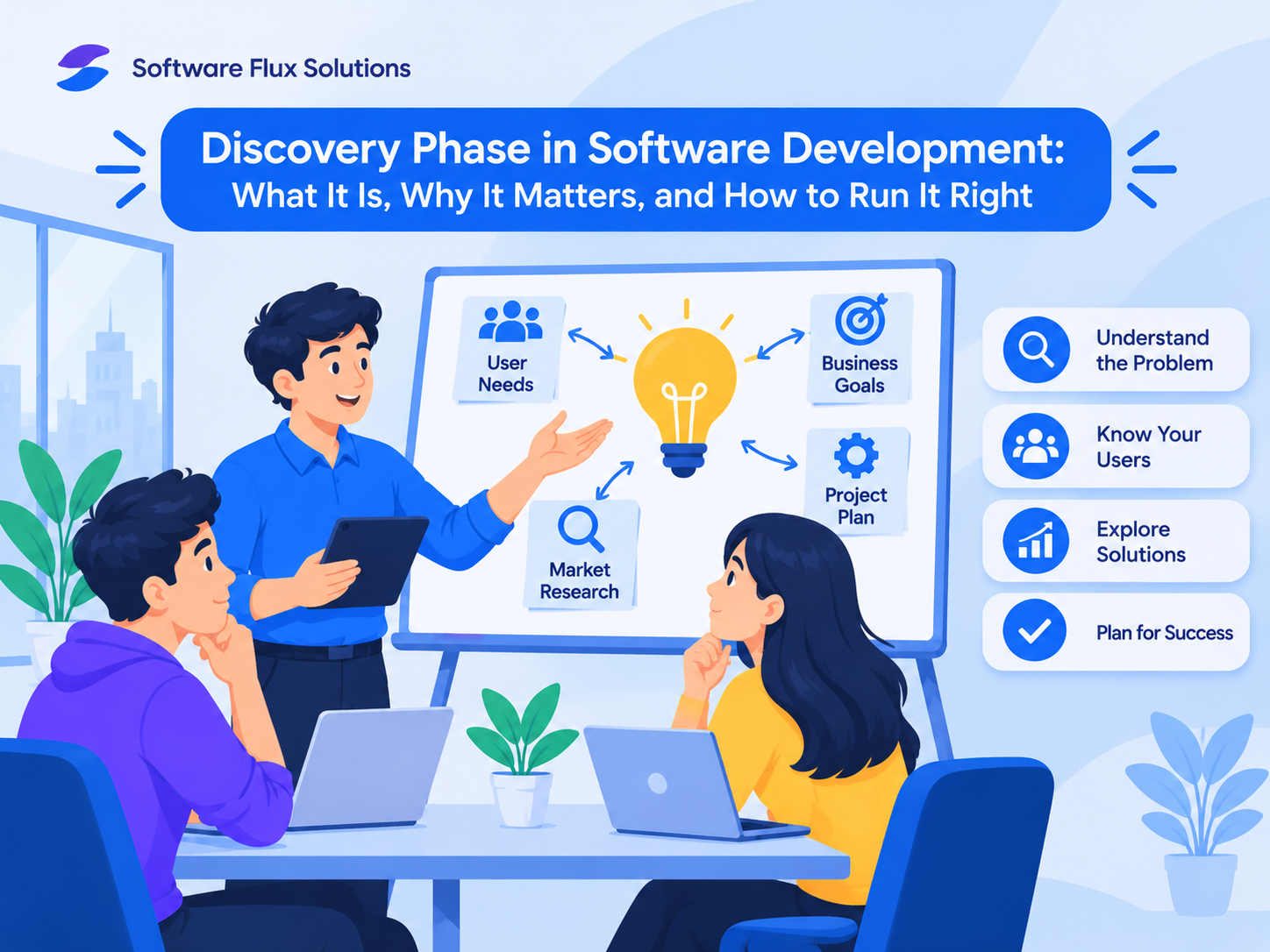
Before writing code, strong agencies invest time in understanding your users and business goals. Ask how they run discovery: do they produce user flows, wireframes, and a technical specification before development begins? The answer reveals whether they build on evidence or on assumptions.
The discovery phase in software development is where the most important decisions are made. A company that skips it is transferring risk to you.
3. UI and UX Design Capability
Mobile apps succeed or fail on the quality of their design. A technically correct app that is confusing or unpleasant to use will not retain users. The best companies either have strong in-house designers or work with trusted design partners. Look for a portfolio that includes wireframes, user flows, and high-fidelity designs, not just finished screenshots.
Interaction design decisions made during design, such as how the app responds to gestures, how feedback is communicated, and how navigation is structured, have a direct impact on retention and user satisfaction.
4. QA and Testing Process
Ask specifically how testing works. Do they have dedicated QA engineers or does each developer test their own code? Do they test on real devices or only emulators? Do they run automated testing alongside manual testing? Apps with poor QA produce one-star reviews quickly, and recovering a poor rating on the App Store or Google Play is very difficult.
5. Post-Launch Support
The launch of an app is not the end of the project. Crashes surface, user feedback reveals missing features, and platform updates from Apple and Google require ongoing maintenance. Understand exactly what happens after launch: is there a support period included, and what does ongoing maintenance cost?
6. Project Management and Communication
Ask who your day-to-day contact will be. Is there a named project manager, or will you be communicating directly with developers? How often will you see working software during development? Sprint-based delivery with demos every two weeks is a strong indicator of a well-run process. Weekly written status updates keep both parties aligned without requiring excessive meetings.
7. References and Client Verifiability
A trustworthy company will offer references willingly. Speak to at least one or two past clients. Ask them specifically about how the company handled problems (every project has them), whether the final product matched what was scoped, and whether they would use the company again.
8. Pricing Model and Contract Terms
Understand whether pricing is fixed-price or time and materials, and what each means for your project. Fixed-price contracts work well when requirements are clear and stable. Time and materials works better when requirements are likely to evolve, as they often do in early-stage product development. Understand what triggers additional costs, and make sure the contract specifies who owns the code and intellectual property after delivery.
9. Data Security and Compliance
If your app handles personal data, health information, payment data, or any regulated information, the development company must understand the relevant compliance requirements. Ask specifically about GDPR compliance for UK and European users, data storage practices, and how they handle authentication and session security.
What to Expect From the Mobile App Development Process
Understanding the typical development process helps you evaluate whether an agency is running a professional engagement or making things up as they go.
Discovery and planning (1 to 3 weeks): Defining the problem, researching users, mapping user flows, selecting technology, and producing a prioritised feature list. This stage should produce written documentation and wireframes.
UI and UX design (2 to 4 weeks): Designing the visual interface and interaction patterns. This includes wireframes, a design system, and high-fidelity screens. User testing of prototypes at this stage saves significant rework later.
Development (4 to 16 weeks depending on scope): Building the app in short sprints, usually two weeks long, with a working demo at the end of each sprint. Backend API development, mobile frontend development, and third-party integrations happen in parallel.
QA and testing (1 to 3 weeks): Testing on real devices, across different operating system versions, with realistic usage scenarios. Performance testing, security testing, and edge-case testing.
App store submission and launch (1 to 2 weeks): Preparing app store listings, screenshots, and descriptions, then submitting for review. Apple’s review process typically takes one to three days. Google Play is usually faster.
Post-launch support: Bug fixes, platform compatibility updates, and iterative improvements based on user feedback and analytics.
For a simple app with one or two core features, the full process from discovery to launch typically takes 10 to 16 weeks. More complex apps with many integrations, multiple user roles, or advanced features can take five to nine months.
How Much Does Mobile App Development Cost?
Cost varies enormously based on complexity, team location, and engagement model. The table below gives realistic planning ranges.
| App type | Description | Typical cost range |
|---|---|---|
| Simple app | One or two core features, basic user authentication, minimal integrations | $15,000 to $40,000 |
| Standard app | Multiple features, user roles, payment integration, one or two third-party APIs | $40,000 to $100,000 |
| Complex app | Advanced features, multiple integrations, offline functionality, custom backend | $100,000 to $250,000+ |
These ranges reflect custom development by professional agencies. Offshore teams in South Asia or Eastern Europe will typically charge less per hour than teams in the UK, US, or Western Europe. The gap in hourly rate does not always translate directly into a gap in final cost, because lower-rate teams sometimes require more management overhead and rework.
For companies considering outsourced software development, the most important factor is not the hourly rate but the total cost to get a working, maintainable product delivered on time.
Additional costs to include in your budget planning: app store developer account fees, third-party service subscriptions (payment gateways, messaging, analytics), ongoing hosting costs, and post-launch maintenance.
Red Flags to Watch Out For
They skip discovery. A company that is ready to quote a fixed price from a one-line brief, without asking detailed questions about your users and requirements, is guessing. That guess will cost you money later.
No dedicated project manager. If your contact during the project is a developer who also manages communication, there is no one whose job is to protect your timeline and budget.
Vague ownership terms. Some agencies retain intellectual property rights over the code they write. Make sure the contract explicitly states that you own the code, designs, and all project materials after delivery.
Portfolio with screenshots only. If you cannot verify that their previous work is live and working, treat the portfolio with caution.
Unusually low quotes. A quote that is significantly below every other estimate is a signal, not a bargain. It usually means scope has been left out, corners will be cut, or the team lacks the experience to know what the project actually involves.
No post-launch support plan. An agency that disappears after delivery leaves you with a product that cannot be maintained or improved. Ask specifically what post-launch support costs and what it covers before signing.
Reluctance to show working software during development. If a team cannot show you a working build at the end of a two-week sprint, something is wrong. Transparency during development is non-negotiable.
Questions to Ask Before You Sign a Contract
- Can I see two or three portfolio apps that are similar to mine, live in the app store?
- How do you run discovery, and what does it produce?
- Who will be my project manager and how often will we communicate?
- How often will I see working software?
- How do you handle scope changes during development?
- What does QA involve, and do you test on real devices?
- Who owns the code and designs after delivery?
- What does post-launch support look like, and what does it cost?
- How do you handle GDPR and data protection for apps that collect user data?
- Can I speak to two previous clients?
Frequently Asked Questions
How do I find the best mobile app development company for my project?
Start by defining your requirements clearly: the platforms you need (iOS, Android, or both), the core features, the user types, and your budget range. Then look for companies with portfolio work in your category, ask for references, and evaluate their discovery and project management process, not just their technology stack.
How long does it take to build a mobile app?
A simple app with one or two core features typically takes 10 to 16 weeks from discovery to launch. Standard apps with multiple features and integrations take 16 to 24 weeks. Complex apps with advanced functionality can take five to nine months or longer.
Should I build native or cross-platform?
For most business applications, cross-platform frameworks such as React Native or Flutter are the right choice. They offer near-native performance, faster development, and lower cost. Pure native development is usually only necessary for apps with extreme performance requirements, heavy use of platform-specific hardware, or complex animations and graphics.
Is it safe to outsource mobile app development?
Yes, when done with the right partner. Key protections include a clear contract specifying IP ownership, a phased payment structure tied to deliverables, regular demos and transparent reporting, and speaking to references before committing.
How much should I budget for mobile app development?
A simple app starts at around $15,000 to $40,000. Standard multi-feature apps typically range from $40,000 to $100,000. Complex enterprise or marketplace apps can exceed $250,000. These figures cover development only. Add app store fees, hosting, third-party service costs, and an annual maintenance budget on top.
What is the difference between a mobile app development company and a freelancer?
A company provides a full team including designers, developers, QA engineers, and a project manager, with defined processes and accountability. A freelancer offers individual skills at potentially lower cost but requires you to manage coordination, testing, and delivery yourself. For most products beyond a simple prototype, a company is the lower-risk choice.
What questions should I ask a mobile app development company before hiring?
Ask about their discovery process, how often you will see working software, who the project manager is, what happens after launch, who owns the code, and whether you can speak to previous clients. These questions reveal more about a company’s reliability than any list of technologies or awards.
Conclusion
Finding the best mobile app development company comes down to fit, not fame. The right partner understands your users, runs a structured process, communicates clearly, and has demonstrated experience with projects similar to yours.
Take time with the evaluation. Ask for working references, not just testimonials. Demand regular demos during development. Make sure the contract is clear on ownership, scope management, and post-launch support. These steps take effort upfront but protect you from the far more expensive problems that arise when the wrong partner is chosen.
If you are planning a mobile app and want to work with a team that covers the full journey from product discovery through design, development, and post-launch support, get in touch with Software Flux Solutions. We work with businesses across the UK, US, and the Netherlands to build mobile and web products that perform from day one.

Zainab Bibi
Senior SAAS Project Manager
1+ Years of Experience in SAAS Projects Management